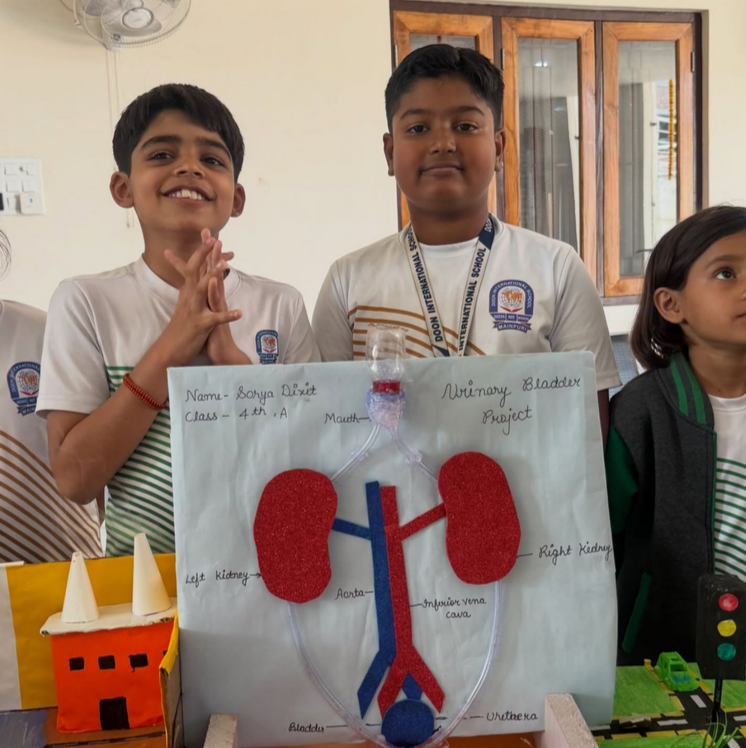
The middle school is quite a sensitive developmental stage for students. This is a phase where they no longer require guidance at every step like primary schooling. Nor are they independent enough to make all the right choices, pick their own subjects or even think about their long-time careers, as senior students do. Thus, the pedagogy demands a balance, where the school must introduce a few subjects and activities, but also keep the option of choice open so that the students understand the concept of professional freedom. Middle school students need to phase out their primary habits and start preparing for the senior stage. At this stage the pace of academic demands is accelerated and, while holistic growth is always the focus, students are gradually prepared to accept bigger challenges. This is also the time where students learn to build on basics. A simple example being science branching out to separate subjects like Physics, Chemistry and Biology as soon as students enter the middle school stage. Here, students start refining their knowledge hinged on the basics they already know and the difficulty level naturally goes up by a notch.
This is also the time when students are grown-up enough to explore many more options, participate in niche areas of interest and develop those specific skill-sets. The pressure of Board examinations is yet to be. Thus, this is also the perfect time to build strong portfolios.
Our curriculum is built around the principles of STEM Education, integrating Science, Technology, Engineering, and Mathematics through a practical and interdisciplinary approach. This has further evolved into STREAM, incorporating Reading and the Arts to nurture creativity, innovation, and holistic thinking. Through this approach, students are encouraged to explore ideas, experiment freely, and develop original solutions.
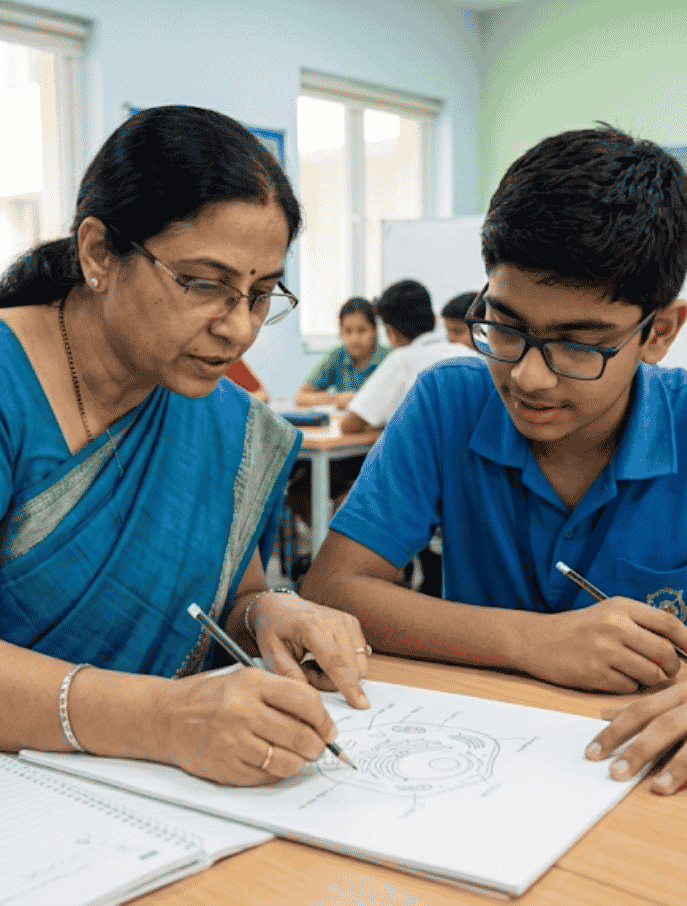
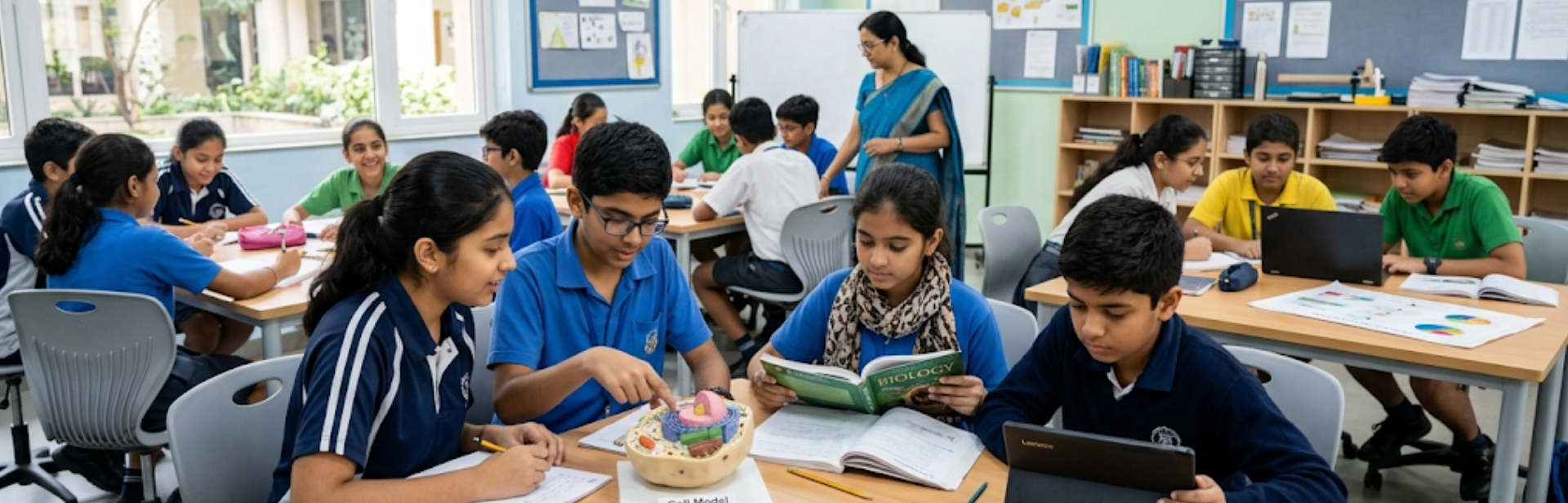
By the middle school years, educators gain a deeper understanding of each student’s individual learning style and intellectual strengths. Classrooms are designed to support diverse learners — auditory, visual, kinesthetic, and reading-writing oriented. With a strong emphasis on language and communication skills, alongside academic growth, the curriculum also supports students inclined towards creative and non-academic pursuits. Learning is enriched through well-equipped laboratories, digital tools, library research, collaborative projects, and interactive Smart Board sessions, ensuring an engaging and well-rounded educational experience.